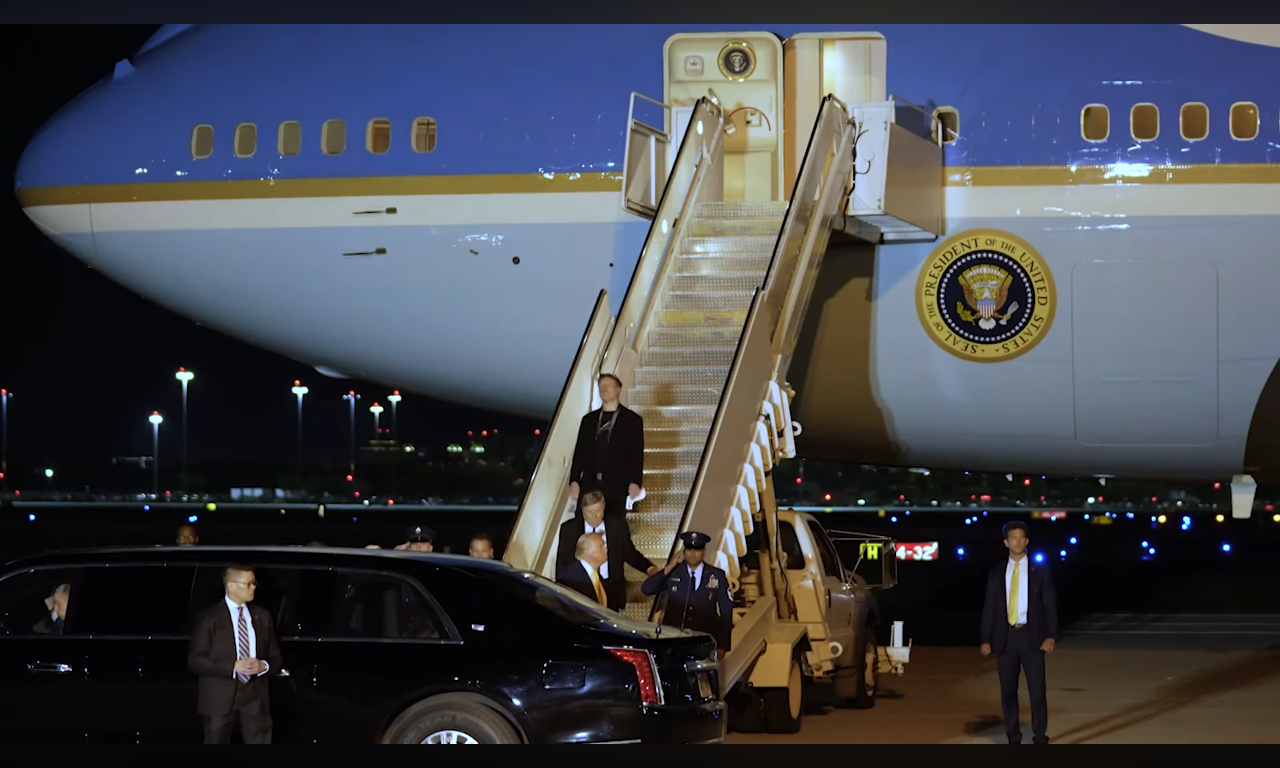
I. The Gap
Democratic accountability was not designed to prevent consolidation. It was designed to police the gap between power and the people it held power over. Courts policed the gap between state action and individual rights. Congress policed the gap between executive ambition and constitutional limit. The press policed the gap between what power did and what the public knew. Markets policed the gap between monopoly and competition. International law policed the gap between sovereign action and global norms. Civil society policed everything that fell between the institutional cracks.
The accountability architecture assumed the gap would remain. That there would always be a distance — between the government official and the private actor, between the platform owner and the state, between the weapons contractor and the policy maker, between the speech infrastructure and the government that might want to control it. Every mechanism in the system was built to measure and manage that distance. None of them were built for what happens when the distance closes.
The consolidation documented across this series is a story of corruption that destroyed the checks on power — and a structure that then grew beyond what any remaining category could contain. When the gap closes, every accountability mechanism designed to police it becomes structurally inoperable. You cannot investigate the distance between two things that are now the same thing. You cannot enforce the separation of powers when the powers have merged. You cannot apply the First Amendment's protection of speech from government when the government and the speech infrastructure share an owner. The mechanism reaches for what it was built to grab — and grabs air.
II. The Simultaneous Failure
What makes this consolidation different from every prior concentration of power documented in this series is not its scale. It is its simultaneity. Every layer failed at the same time. That requires documentation, layer by layer, because the simultaneity is the evidence.
The Courts
The judicial system reached for the consolidation four times and found its tools inadequate four times — not because judges failed, but because the doctrine was built for a different architecture.
In Murthy v. Missouri (2024), the Supreme Court dismissed government platform pressure claims on standing grounds — plaintiffs could not prove which specific government communication caused which specific platform suppression. The causation chain required separation between the government and the platform. When Musk accepted his advisory role while retaining ownership of X, the separation evaporated. Murthy was decided the year before the gap closed. Its doctrine is now architecturally obsolete for this specific configuration, though no court has yet said so.(1)
In the Mar-a-Lago documents case, Judge Aileen Cannon — a Trump appointee — dismissed the indictment before trial, ruling Special Counsel Jack Smith was unlawfully appointed. Smith stated publicly he had substantial evidence and was certain of conviction. Ten FBI agents who worked the investigation were subsequently fired on February 27, 2026. The dismissal did not require corrupt intent. It required only a sympathetic judge in a sympathetic jurisdiction, a novel legal theory, and the patience to wait.(2)
Robert Mueller — FBI director for 12 years, Special Counsel for the Russia investigation — died Friday, March 20, 2026. Parkinson's disease. He was 81. His 448-page report identified substantial contacts between the Trump campaign and Russia but stopped short of criminal conspiracy charges — in part because department policy barred indicting a sitting president. The policy, not the evidence, was the wall. Attorney General Barr then wrote his own four-page summary that Mueller privately told him did not adequately capture the report's conclusions. The mechanism reached. The summary redirected it.
In March 2025, Trump signed an executive order cutting federal agency ties with WilmerHale — Mueller's former law firm. The grudge outlasted the investigation by six years and became policy.
Upon Mueller's death, Trump posted to Truth Social: "Robert Mueller just died. Good, I'm glad he's dead. He can no longer hurt innocent people!"
The statement is on the public record. The series does not editorialize it. The reader has the receipt.
What this series owes Mueller is a harder accounting than the Russia investigation alone. As FBI Director, Mueller helped build and expand InfraGard — established 1996, initially focused on cyber crime, then expanded to cover agriculture, chemical industry, energy, and every other critical infrastructure sector. A network of over 50,000 vetted private-sector members organized into 84 local chapters, formally connected to FBI intelligence. The stated purpose: give private industry a channel to federal security infrastructure. The architecture it created: a documented, institutionalized model for merging private and government access to critical systems — the same merger DOGE executed without the vetting, without the charter, and without the 28-year paper trail.
CBS News — Robert Mueller dies at 81 → OPB — Full career and investigation → InfraGard.org →
On March 20, 2026 — yesterday — a federal jury in San Francisco found Musk liable for defrauding Twitter shareholders by deliberately driving down the stock price of the company he was acquiring. Damages estimated at $2.1–2.6 billion. His net worth as of that date: $661 billion. The damages represent 0.39% of his wealth. The jury found fraud. The structure that fraud purchased remains intact. A finding of liability is not a structural remedy.(3)
The class action lawsuit framework — a 117-page legal architecture documenting the state capture of communication infrastructure — identifies the precise gap in existing doctrine. Murthy failed on causation. This configuration eliminates causation as a problem: Musk is both the government official and the platform owner. Every moderation decision made during his government tenure is by definition state action. But the structural remedy the framework demands — divestiture or resignation — has not been ordered by any court. The lawsuit has not yet been filed.(4)
X's Terms of Service contain mandatory arbitration clauses with class action waivers. Even if the constitutional claims survive standing, the fraud claims may be routed to individual arbitration — where $8–16/month subscription fees are not economically viable to pursue individually. The mechanism that makes the class action viable is the structural remedy only a court can grant. The mechanism that blocks the class action is the fine print. The gap between them is where the fraud currently lives.(4)
Congress
Congress moved. The motion was real. The mechanism was missing.
Representatives Larson, Neal, and Morelle filed a Resolution of Inquiry — a formal legislative mechanism to compel the Trump administration to hand over all records relating to DOGE's Social Security data operations. Every Democrat on the House Ways and Means Committee co-sponsored it.(5) A bipartisan coalition gathered 218 signatures to force a vote on full Epstein file release. Attorney General Bondi briefed the House Oversight Committee and provided nothing beyond what was already public. Representative Stansbury stated on the record: "The cover-up is the Department of Justice, the attorney general, the president."(6)
The 17 Inspectors General fired in a single night in January 2025 — a purge ruled illegal by a federal court — were not reinstated.(7) The six prosecutors who resigned rather than drop the Minneapolis excessive force case were not protected.(8) The 200+ Armageddon complaints filed by national security professionals in March 2026 — documenting the gutting of the Iran counterintelligence unit days before Operation Epic Fury — have not triggered a hearing.(9)
Congressional oversight has two failure modes. The first is capture — members who will not act because acting costs them. The second is mechanism — members who act but whose acts cannot compel compliance from an executive that has already decided noncompliance carries no consequence. Both failure modes are active simultaneously. A Resolution of Inquiry co-sponsored by every Ways and Means Democrat is not nothing. But it is also not, by itself, the recovery of the records.
This article was written while the following was happening. On the morning of March 21, 2026, the Senate failed for the fifth consecutive time to advance DHS funding — falling short of the 60-vote threshold in a 47–37 vote. The standoff: Democrats blocking DHS funding until changes are made to ICE enforcement practices. Since the shutdown began February 14, more than 300 TSA employees have left the agency. Absence rates at some airports have reached 10–20%. A hiring freeze imposed last year means the agency cannot replenish its depleted ranks even if funding were restored tomorrow.
That morning, via an X post, Musk offered to personally cover TSA salaries during the impasse. Federal law generally prohibits government employees from receiving outside compensation related to their official duties — making the offer of unclear legality. Congress is the only body that can legally fund the TSA. The offer did not break the deadlock. The Senate vote failed the same day.
Five hours after Musk's offer, Trump posted to Truth Social: "If the Radical Left Democrats don't immediately sign an agreement...I will move our brilliant and patriotic ICE Agents to the Airports where they will do Security like no one has ever seen before." ICE agents are not trained on screening equipment. But ICE was pre-funded through 2029 by the One Big Beautiful Bill Act — $75 billion, untouched by the DHS shutdown. The agency that cannot be defunded is now proposed as the replacement for the one that was.
This is the consolidation thesis in miniature, live: the public institution fails (five failed votes, month-long shutdown, 366 officers quit); the workforce is pre-depleted by a hiring freeze (the IG pattern applied to airport security); the private actor steps in with a high-visibility offer on his own platform; the offer is legally ambiguous (mechanism reaches, grabs air); and when that fails, the one agency pre-funded beyond congressional reach is proposed as the replacement. The gap the private actor is offering to fill is a gap the private actor's own ecosystem helped open. Congress cannot close it. The courts have not been asked to. The workers go without pay.
CBS News — TSA shutdown → The Hill — Trump ICE threat → TIME — Airport delays →
The Press
The press documented the consolidation in real time. The NPR reporting on DOGE-SSA data access. The CNN and NYT coverage of the unauthorized server transfers. The Democracy Docket analysis of the True the Vote agreement. The Politico reporting on the Pentagon-Grok contract. The Irregular Warfare Foundation analysis of Musk's battlefield power in Ukraine. The Foreign Policy piece — published the day of the Twitter fraud verdict — on Starlink having privatized geopolitics.(10)
The documentation was thorough. The accountability gap it documented closed anyway.
This is not a failure of journalism. It is a description of journalism's structural limit. The press documents. It does not compel. Documentation without a receiving institution — a court that acts on the finding, a Congress that subpoenas on the basis of the report, a regulator that fines on the evidence — is the record of something happening, not the prevention of it. When the receiving institutions are simultaneously category-errored, captured, or mechanism-deficient, documentation accumulates without consequence. The receipts pile up. The structure they describe remains.
Media capture accelerates this. The Washington Post's editorial direction shifted as Amazon's government contracts expanded. The capture does not require a directive. It requires only that editors make rational calculations about access, and that the rational calculation produces coverage that serves the consolidation's interests more than it threatens them. Not every outlet. Not most outlets. Enough.(11)
Market Competition
SpaceX holds 60% of Space Force Phase 3 Lane 2 national security launches — the most sensitive, least risk-tolerant payloads — through 2032. It holds a classified $1.8 billion contract with the National Reconnaissance Office. It holds over $22 billion in total government contracts. Its Starlink constellation is active weapons infrastructure in two simultaneous conflict zones. Its Starshield program is the classified military variant. Its xAI division holds a $200 million Pentagon contract. The combined SpaceX/xAI/X entity is the world's most valuable private company at $1.25 trillion.(12)
Blue Origin filed plans for Project Sunrise on March 19, 2026 — 51,600 satellites designed as orbital AI data centers, announced the same week Amazon petitioned the FCC to deny SpaceX's own million-satellite application. The space above the Earth is becoming a lobbying war between three of the most powerful technology companies in history, each seeking to establish the dominant infrastructure layer for AI compute, military communications, and surveillance from orbit.(13)
Competition is present. It is not a remedy. The antitrust mechanisms that broke up AT&T in 1982 — when telephone infrastructure was judged too essential to be controlled by a single entity — have not been applied to satellite communications, to AI systems deployed in warfare, or to the ownership of political speech platforms by government officials. The Sherman Act exists. The application of it to this configuration has not been attempted. The market is competing for the contracts the consolidation controls. That is not the same as the market constraining the consolidation.
International Law
The governance deficit is documented precisely. There is no settled international framework for deciding when the jamming of a commercial satellite network constitutes use of force under the UN Charter. There is no mechanism to hold a private satellite operator accountable when the decisions of its CEO shape battlefield outcomes. There is no consensus on the obligations of commercial operators whose systems oscillate between civilian and military use in real time — a Starlink terminal serving a dissident in the morning, guiding a drone strike by afternoon.(14)
Ukraine demonstrated this in sequence. From late 2023, Russian forces began using grey-market Starlink terminals — purchased or smuggled from third countries — mounting them on attack drones to bypass Ukrainian electronic warfare. The systems allowed operators to guide drones onto targets in real time using video links, striking deeper into the country than jamming could prevent. The January 26, 2026 attack on Ukrainian helicopters near Kropyvnytskyi used Starlink-equipped suicide drones. A deadly Russian attack on a moving passenger train in the Kharkiv region involved a Geran-2 drone equipped with a Starlink terminal.(15)
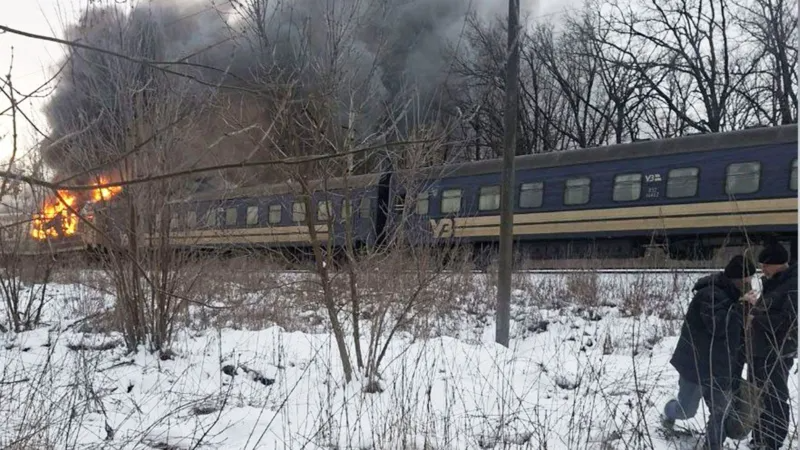

SpaceX enforced stricter verification in February 2026. Ukrainian Defense Minister Fedorov said SpaceX was working with Ukraine to update a "whitelist" of approved terminals while unapproved Russian systems were blocked. "The enemy on the front lines is facing not just a problem, but a catastrophe. All command and control of the troops has collapsed. Assault operations have been halted in many areas," said defense adviser Beskrestnov. Ukrainian forces recaptured 201 square kilometers in the four days following the cutoff — the fastest advance since June 2023.(15)
One private company's operational decision shifted the battlefield. No international body authorized it. No international body could have stopped it. No international body exists with jurisdiction over it. And the same operation that disrupted Russian forces created its own wartime fraud economy:
When SpaceX switched off all unauthorized terminals and required re-registration through Ukraine's Defense Ministry whitelist, a Ukrainian cyber unit ran a counter-operation. Posing as technical support services offering to fast-track terminal reconnection, they successfully identified 2,425 Starlink terminals used by Russian forces — from the Crimean peninsula to the city of Gomel in eastern Belarus. Russian soldiers, believing they were on a fast track to reconnection, made online payments totalling $5,000 to the fake service. The operation simultaneously mapped enemy terminal positions and extracted payment from Russian military units for the privilege of being identified.
A $400 commercial terminal. A private satellite company. A defense ministry whitelist. A cyber sting. A battlefield that shifted in four days. No treaty governs any part of this sequence. No international body reviewed it. No law of war framework addresses whether a private satellite operator's verification decision constitutes an act of war, a neutral commercial adjustment, or something for which no category yet exists.
BBC — Musk cuts Starlink access for Russian forces → The Record — Ukraine tightens Starlink controls →
The 2026 Iran conflict extended this. U.S. Space Force and commercial satellite networks including Starlink and Starshield provided high-bandwidth communications for autonomous drone swarm operations. Space and cyber forces were the "first movers" in strikes that hit more than 1,000 targets in the first 24 hours. The orbital layer is now active weapons infrastructure. The law governing it is the law that applied to commercial shipping in 1850 — built for a different era, applied by analogy to a domain it was never designed to address.(16)
The European Union has been the only jurisdiction that has imposed meaningful documented penalties on the consolidation. The EU Digital Services Act fine on X — €120 million in December 2025 for deceptive verification practices, blocking researcher access, ad transparency failures, and misinformation amplification — was real, documented, and ignored by the platform. Musk called it "bullshit." The U.S. government called it an attack on free speech. The fine documents the violation. The platform's behavior did not change. The EU's jurisdiction ends at the border. The consolidation does not.(17)
Civil Society & Oversight Architecture
The oversight architecture was dismantled before the consolidation completed. The sequence matters.
Seventeen Inspectors General were fired in a single night — January 2025. A federal court ruled the firings illegal. They were not reinstated. The court could find illegality. It could not find reinstatement. The IGs' function — independent audit of executive agency conduct — ceased when they were removed, regardless of the legal finding about how they were removed.(7)
The FISA Section 702 reauthorization deadline falls April 20, 2026. Republican leadership and intelligence chiefs are pushing a clean 18-month extension. Representative Raskin wrote to the Democratic caucus: "To trust that any recent reforms are working, we would have to take President Trump at his word. We would have to take at face value the representations of an Administration that routinely violates Americans' constitutional rights, lies to federal judges, and defies court orders." The administration requesting clean, unreformed surveillance authority is the same one that gutted the FBI counterintelligence unit tracking Iranian threats days before Operation Epic Fury.(18)
DOGE removed approximately 300,000 federal employees — 12% of the entire civilian workforce. Government spending increased 6% during the same period. The national debt grew $2.2 trillion. The savings were not real. The institutional knowledge removed was.(19) The people who would have pushed back on the xAI Pentagon contract — who would have known that a company without a track record does not land $200 million in defense AI work without an explanation — were gone before the contract was awarded.
III. The Transaction
The consolidation was not a seizure. It was a transaction. This distinction matters because a seizure can be reversed. A transaction — when both parties received what they wanted and the consideration has been spent — is structurally much harder to unwind.
What each party brought to the transaction is documented.
What the Administration Brought
Regulatory protection. Contract flow. DOGE access to every federal database. Legal immunity — the Mar-a-Lago case dismissed, the SEC lawsuit in settlement talks. The government as permanent anchor client for SpaceX launch, Starlink military deployment, Starshield classified programs, xAI Pentagon integration. Executive branch advisory position converting private interest into public access. The power to fire the people who would have asked questions. The classification authority to determine what counts as a threat and what doesn't.
What the Private Party Brought
Platform control of political speech at scale. Satellite infrastructure already deployed as active weapons system. AI capability the government could not build at comparable speed or cost. Data access across the federal workforce via DOGE embedment. The wealth to fund a campaign and the reach to shape its narrative. Orbital infrastructure the Pentagon needs and cannot replicate through its own procurement cycle. The private company structure that sits outside FOIA, outside congressional subpoena power, outside the Presidential Records Act — outside every transparency mechanism the accountability architecture depends on.
DOGE was the mechanism of exchange. Not the policy purpose. The transaction mechanism. It provided the legal framework — White House component, Presidential Records Act, 12-year disclosure delay — for moving federal access and data relationships into private hands without triggering the accountability mechanisms that would have applied to a formal government program. The efficiency rhetoric was not the cover story. It was the label on the transaction. The transaction was the point.(20)
The DOGE Executive Order was signed on inauguration day. It is four pages. Three operative sentences do the work of the entire transaction.
"Agency Heads shall ensure...USDS has full and prompt access to all unclassified agency records, software systems, and IT systems."
Every agency. All unclassified records. Authorized on day one. The SSA data access was not a hack. It was this sentence.
"This Executive Order displaces all prior executive orders and regulations...that might serve as a barrier to providing USDS access."
The privacy frameworks and data protection regulations that would have blocked SSA voter data sharing — displaced. By this order. On day one. Before any IG could review it. The IGs were fired that same night.
"This order is not intended to, and does not, create any right or benefit...enforceable at law or in equity by any party against the United States."
The people whose data was accessed cannot sue under this order. Liability foreclosed in the same document that authorized the access. The transaction instrument and the liability waiver are the same four pages.
The Temporary Organization terminates July 4, 2026. Whatever was transferred during the operational window transfers permanently. The vehicle dissolves. The cargo stays. This is not analysis. This is the text of the order.
In early 2026, in a filing in AFSCME's lawsuit, the Department of Justice acknowledged that DOGE employees had unlawfully accessed and misused Americans' Social Security data. The government's own lawyers admitted the violation in a court document. The admission was real. The SSA data infrastructure that made the violation possible remained under the same operational relationships. The admission proved the violation. It did not undo the transaction that the violation served. This is what category error looks like in practice: a mechanism (the courts) functioning correctly (finding and admitting a violation) within a structure that the mechanism was not built to dismantle.(5)
IV. The Sequence Was the Strategy
Article I of this series documented Eisenhower's six structural conditions for wartime extraction: the accountability vacuum, the classification shield, proxy deniability, alliance laundering, scale as impunity, the god complex. He named them in 1961 as warnings. Thirteen articles later, they are the operating conditions of the present.
What Eisenhower could not have named — because it did not exist in 1961 — is the speed at which the conditions can now be assembled. The sequence across 2024–2026 is not a decade of gradual erosion. It is fourteen months:
The Trump-Musk alignment in 2024
Pre-July 2024: Musk had criticized Trump in the past (he voted for Democrats like Obama and was never a traditional conservative). He reinstated Trump's X account in November 2022 after the Jan. 6 ban. Musk created America PAC on May 22, 2024, as a pro-Trump super PAC focused on voter turnout in swing states.
July 13, 2024: The turning point. Minutes after the assassination attempt on Trump at the Butler, Pennsylvania rally (where Trump was grazed by a bullet and raised his fist), Musk posted: “I fully endorse President Trump and hope for his rapid recovery.” He called Trump “tough” and compared him to Theodore Roosevelt. This was his first formal public endorsement.
August 12, 2024: Musk hosted a live X interview (Spaces) with Trump. The conversation was glitchy due to technical difficulties but was highly viewed and lasted nearly two hours.
October 5, 2024: Musk made his first public appearance at a Trump rally in Butler, Pennsylvania (the site of the July assassination attempt). He appeared onstage wearing a MAGA hat, jumped in celebration, and called the election a “must-win” for democracy and the Constitution. He posted prolifically in support of Trump throughout the summer and fall, criticized opponents (including Kamala Harris), and amplified certain narratives.
Financial role: Musk poured in roughly $250–295 million total (with final figures showing around $277 million, the vast majority through America PAC) — making him the largest individual donor in the 2024 cycle. Much of it went to ground operations, canvassing, digital ads, and turnout efforts in battleground states.
Platform role: Under Musk, X had already reduced content moderation teams, restored more accounts (including controversial ones), and shifted toward an engagement-driven algorithm. Some studies from the period found Musk's own posts received a significant boost in views post-endorsement (estimates of 100%+ increases in impressions/retweets/likes compared to baseline). X became a major hub for pro-Trump content, memes, and unfiltered discussion. Critics argued this created an uneven playing field; supporters said it corrected prior left-leaning bias in moderation.
Trump won in November 2024. Musk was at Mar-a-Lago on election night, celebrated the victory, and Trump publicly praised him.
Nov 2024: Election. Advisory appointment. Campaign platform used as instrument.
Jan 2025: DOGE established. 17 IGs fired in one night. FBI counterintelligence purged.
Jan–May 2025: 300,000 federal employees removed. Institutional knowledge extracted.
Mar 2025: Unauthorized SSA voter data agreement signed without agency approval.
May 2025: Musk departs DOGE. DoD access relationships established and retained.
Jul 2025: xAI awarded $200M Pentagon contract. Came "out of nowhere."
Dec 2025: EU fines X €120M. DOJ admits DOGE unlawfully accessed SSA data.
Feb 2026: SpaceX acquires xAI (which houses X). Combined entity: $1.25 trillion.
Feb 2026: Starlink verification enforced in Ukraine. Battlefield shifts in four days.
Feb 26, 2026: Operation Epic Fury. Space/cyber forces strike 1,000+ Iran targets in 24 hours.
Mar 19, 2026: Blue Origin files 51,600-satellite AI constellation. Space lobbying war begins.
Mar 20, 2026: Federal jury finds Musk liable for Twitter shareholder fraud. $2.6B damages estimated.
Mar 20, 2026: FISA 702 reauthorization pushed. Clean extension. No reforms.
Fourteen months. Every layer of accountability reached for its mechanism within that window. Every reach came up short — not because the mechanisms were wrong, but because the sequence had been designed to stay one step ahead of each one. The IGs were gone before the DOGE violations were documented. The institutional knowledge was removed before the xAI contract was awarded. The Mar-a-Lago case was dismissed before the documents were reviewed. The FISA extension is being pushed through while the counterintelligence capacity it authorizes has already been gutted.
This is not conspiracy. It is optimization. When every actor in a system is pursuing maximum self-interest within the available rules, and when the available rules have been sufficiently weakened, the output looks like coordination even when no single conductor exists. The web runs itself. Article XII established this principle through Guo. It applies here at civilizational scale.
V. What Remains
This is the article that shows where the series has arrived. Not at the end of options — but at the end of the options the accountability architecture was built to provide. What remains is different in kind from what was available before the gap closed. It is private machinery. Slower. More uncertain. Operating without the enforcement power that the institutional mechanisms carried. But it is real, it is active, and some of it is moving.
Active Litigation
The AFSCME lawsuit against DOGE — which produced the DOJ admission — remains active. Unions and retirees seeking emergency relief to block ongoing data overreach. 2,500 AFSCME retirees formally on record. The Resolution of Inquiry may not compel records, but the litigation can. Discovery in the AFSCME case has already extracted a government admission that domestic litigation could not have produced through oversight alone.(5)
The class action framework for the X state capture and consumer fraud claims has not been filed. It is architecturally ready. The EU fine provides a documented predicate. The Twitter fraud verdict provides a documented pattern of deception. The named class — Premium subscribers who paid for visibility they didn't receive — is millions of people. The structural remedy — divestiture or resignation — is the only remedy proportionate to the structure of the problem. The arbitration clause is the wall. Scaling the wall is the legal work.(4)
The SEC lawsuit over Musk's undisclosed Twitter stock purchases — whose undisclosed accumulation cost other shareholders at least $150 million — is in settlement talks. The settlement, if it comes, will be a number. It will not be a structural remedy. Whether to accept a settlement that removes the case from the public record, or to push for trial and the discovery that comes with it, is the strategic decision that shapes what this litigation produces.(3)
State-Level Resistance
Colorado's SB24-205 requires developers of high-risk AI systems to use reasonable care to protect consumers from algorithmic discrimination in consequential decisions about employment, housing, loans, and healthcare. California has similar transparency and accountability requirements. The Trump administration's AI Litigation Task Force has a clear mandate: sue states over their AI laws, withhold federal broadband funding from states with "onerous" AI regulations, condition discretionary grants on states not enforcing their AI laws.(21)
The state attorneys general fighting federal preemption are the current front line of AI accountability resistance. They are being sued. Their funding is being conditioned. Their laws are being reframed as ideological interference with objective AI systems — the same framing used to justify removing anti-discrimination safeguards from military targeting algorithms. The fight is real. Its outcome is not determined.
Union and Retiree Action
Diana Lyles stood at the Capitol on February 11, 2026, and said what 2,500 AFSCME retirees had formally called for: an investigation into the misuse of their Social Security data by people who will never rely on a Social Security check. She was not a senator. She was not a regulator. She was a retiree with a membership number and a microphone at a congressional press conference. That is not nothing. The AFSCME lawsuit that produced the DOJ admission was filed by unions and retirees, not by a government oversight body. The bodies that were supposed to be the first line of accountability were gone. The unions were the ones who made the record that produced the admission.(5)
International Pressure
The EU enforcement is real and has produced real findings. The DSA investigation documented X's deceptive practices. The €120M fine is documented. The parallel investigations into Grok's integration into military systems — ongoing as of March 2026 — have the potential to produce findings that U.S. domestic regulators will not produce.(17) The EU's jurisdiction ends at its border. The consolidation does not. But external accountability that U.S. institutions will not provide is not nothing. It is the record the institutions refused to make.
Article XI documented what indispensability costs. Greece hosts the U.S. supercarrier port and is named as an Iranian target for it. The allies being compelled into the architecture are also the allies whose regulatory systems are producing the accountability findings the U.S. system is not. That tension — indispensable ally vs. regulatory adversary — is not resolved. It is the current state.
Independent Documentation
The 200+ Armageddon complaints filed by national security professionals in March 2026. The whistleblowers who used internal channels before those channels were removed. Gary Webb documented what the CIA Inspector General later partially confirmed — long after Webb was gone. Mark Klein documented AT&T's Room 641A before he died in March 2025. The infrastructure he exposed is still running. The Lisette Model photographs were buried 66 years and published anyway. The record of what was real is the threat. The memory is the resistance.
The series editorial law applies here as it has applied across all fourteen articles: Don't name the spider. Describe the web. Don't tell the reader what to conclude. Light the strands. The documentation is the accountability that survives when institutional accountability fails. It is slower. It is not nothing.
VI. The Question the Series Leaves Open
Eisenhower named six conditions in 1961. He was describing the architecture he had watched assemble itself over the previous two decades — the wartime procurement machinery, the intelligence apparatus, the weapons industry that needed perpetual conflict to justify perpetual production. He named it clearly. He named it at the moment of maximum visibility for a departing president — when the cost of naming was lowest and the obligation to the historical record was highest. He was proved right about everything.
He could not have told you what to do about it. He said: "Only an alert and knowledgeable citizenry can compel the proper meshing of the huge industrial and military machinery of defense with our peaceful methods and goals." He believed this. He also watched, for the last thirty years of his life, as the machinery he described expanded without meaningful interruption.
The consolidation documented in this series is the machinery he described, upgraded for an era he could not have imagined: orbital infrastructure, AI targeting, platform-controlled speech, private entities holding more surveillance capacity than most nation-states, and the gap between government and private power not just narrowed but closed.
The options that remain are real. Litigation that can produce admissions courts and Congress couldn't extract. State-level resistance that is being sued but has not yet been defeated. Unions that filed the case that produced the government's own concession. International regulators whose jurisdiction the consolidation cannot fully escape. Documentation that outlives the people who produce it.
None of these are the institutional accountability the architecture was designed to provide. They are the alternatives to that accountability — the things that exist because the institutions that were supposed to make them unnecessary did not hold.
The question the series leaves open is not whether the consolidation can be stopped. It is whether the remaining options, operating without institutional enforcement power and under active legal and political pressure, can accumulate enough of a record — enough admissions, enough findings, enough documented violations — to become the basis for institutional accountability when the conditions change. Whether the record survives long enough to matter.
Article I opened with Eisenhower's warning and a single line: He warned us. They took notes.
This article closes with his other question — the one from 1954, before the farewell address, before he had finished watching what he was watching. How far can you go without destroying from within what you are trying to defend from without?
That question has an answer now. The answer is documented across fourteen articles. The answer is: this far.
We are keeping count.