The Counterfactual We Are Living In
In February 2026, on the podcast The Oath and the Office, host John Fugelsang said plainly: "If Nixon had Fox News, he would not have had to resign."(1)
That sentence is not partisan commentary. It is a structural observation about what makes accountability possible. Nixon resigned because the press could report freely, the institutions held, and there was no permanent media infrastructure dedicated to reframing every revelation as a hoax. None of those conditions exist in the same way today. We are living in the counterfactual Nixon's architects could only imagine — and the question this article examines is: what does the silencing mechanism look like when the environment has been this thoroughly prepared for it?
The answer is not one thing. It is six things, deployed simultaneously against different targets with different tools. Together they produce what press freedom scholars call the chilling effect — not the silencing of every voice, but the silencing of enough voices, visibly enough, that the rest learn the lesson without needing to be taught it directly.
The Taxonomy of Quiet
Each tool is aimed at a different audience. The nickname is for the press corps watching in the room. The lawsuit is for publishers calculating legal exposure. The criminal referral is for broadcasters with access to power. The purge is for career federal employees. The redaction is for victims considering coming forward. The disappearance — that one needs no audience. It is ambient. It does not require attribution. It only requires that it remain unresolved.

Together they do not silence every voice. They do not need to. They silence enough voices that the rest recalibrate without being asked.
The Unbroken Line
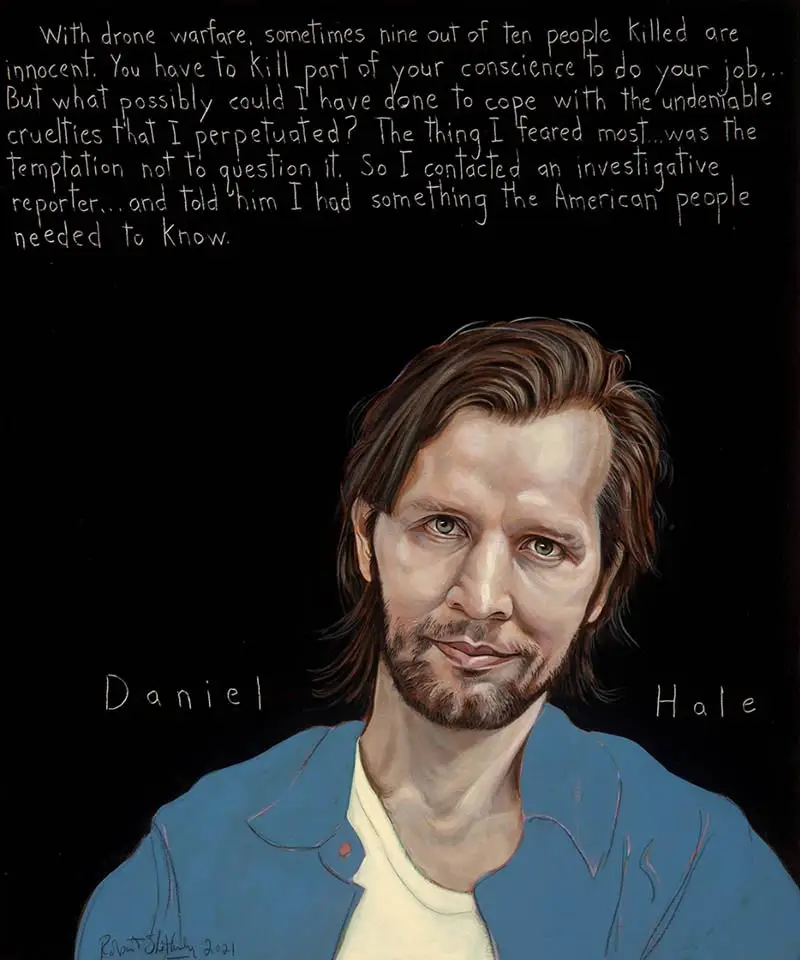
Before the portraits — the lineage in one passage, because it matters that this is not new. It has never been new. The Espionage Act was passed in 1917 to punish foreign spies. It has been used, with escalating frequency since the Obama administration, to punish Americans who told the truth about what their government was doing in their name.
None of these people were charged with lying. None were proven to have endangered specific lives. All were charged with telling the truth about something the government wanted kept secret. The Espionage Act does not permit a public interest defense. A person charged under it cannot tell the jury why they did what they did, whether the information was already public, or whether its disclosure served the public good. The law does not care. The instruction is the instruction.
The Portraits
The Cannon: The Classification Shield in the Judiciary
The classification shield is not only an executive tool. It operates through the courts — through judges appointed for their loyalty, through procedural mechanisms that achieve the same result as prosecution without requiring a trial.
Judge Aileen Cannon dismissed the classified documents case against Trump in July 2024, ruling that Special Counsel Jack Smith had been unlawfully appointed. The ruling was widely criticized by legal scholars. In February 2026, Cannon blocked the release of Volume II of Jack Smith's report — the section containing the detailed evidence of Trump's conduct in the classified documents case. Her reasoning: releasing it would "plainly offend" her previous dismissal and "contravene basic notions of fairness."(5)
To be precise about what this means: the same judge who dismissed the case is now blocking the evidence that the case existed. The documents remain classified not by the executive branch but by a federal court ruling. The evidence of the crime is being protected by the same judiciary that declined to prosecute it. That is the classification shield operating at its most complete — not through secrecy, but through a ruling that treats the evidence of wrongdoing as an offense against the wrongdoer's acquittal.
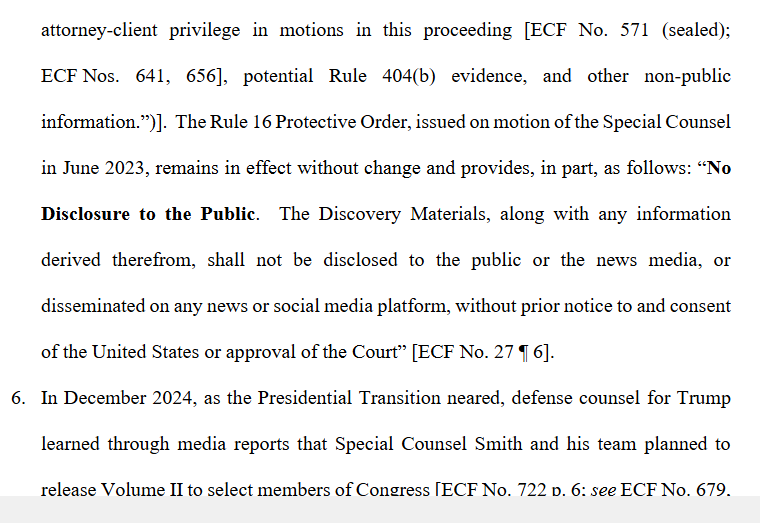
The Knight First Amendment Institute at Columbia University is fighting to release the report through the Eleventh Circuit Court of Appeals. The Institute argues the First Amendment and common law guarantee the public a right of access to records submitted in connection with criminal proceedings. Cannon's response: she has also been asked to destroy the report. The Institute's filing notes that she lacks jurisdiction to order its destruction while the appeal is pending.(5)
"Judge Cannon's decision to permanently block the release of this extraordinarily significant report is impossible to square with the First Amendment and the common law. There is no legitimate basis for its continued suppression."Fort Pierce, Florida · February 2026
"A major purpose of the First Amendment is to protect the free discussion of governmental affairs, and the Supreme Court has repeatedly held that the First Amendment protects the public's right of access to documents filed in connection with criminal trials. Given the significance of the Special Counsel's report, and the role it played in earlier proceedings before Judge Cannon, there is really no question that both the common law and the First Amendment require the report's release."Fort Pierce, Florida · February 2026
The public's right to know what evidence existed in the classified documents case against the sitting president is being litigated in federal court — in 2026, after the case was dismissed, after the administration took office, after the FBI agents who built it were fired. The report exists. The public cannot read it. The judge who dismissed the case controls whether it survives.
The Chilling Effect: What We Never See
The most powerful evidence of the silencing mechanism is invisible. It is the story that was never filed. The source that stopped returning calls. The editor who said "we can't touch this right now." The network executive who killed a segment that was ready to air.
In 2002, journalist Vicky Ward investigated Jeffrey Epstein for Vanity Fair. She had two women willing to go on record with allegations about Epstein's conduct. The most disturbing allegations were cut from the final published profile. Ward has since said she was told to remove them. The piece ran without them. The story that would have broken the Epstein network in 2002 — seventeen years before his arrest — was not suppressed through a court order or a classification stamp. It was suppressed through an editorial decision in a room where no one will ever be held accountable for it.(6)

Ward did not stop. In 2019 she published Kushner, Inc. — a book about the family now running the Board of Peace, now managing $2 billion in Saudi sovereign wealth, now architecting the reconstruction of the territory whose population was displaced. The same journalist who couldn't get the Epstein story published in full went on to document the people who would later be in the room with Epstein's associates. The chilling effect has a long memory. So does the reporter.(6)

The chilling effect does not require prosecution. It requires only that the cost of publishing be made visible enough, frequently enough, that the calculation shifts. Every editor who watched the NYT lawsuit get refiled with Haberman added personally learned something. Every federal employee who watched Vindman escorted from the White House learned something. None of them needed to be told directly. The instruction is ambient. It is everywhere. It says the same thing in every language it speaks.
This Morning's Dashboard
At approximately 11am on March 15, 2026, the following four stories were breaking simultaneously:
Tucker Carlson — the CIA accessed his messages and prepared a criminal referral for talking to Iranians before the war. Carlson: "One of the reasons CIA passes on criminal complaints to law enforcement is to justify warrants for spying on Americans." The man who was the most-watched cable news host in the country, whose network defended every action of the administration now using the surveillance apparatus against him, named the mechanism precisely.(7)
Raytheon — $2 billion satellite terminal contract expansion with the US Air Force. The weapons revenue stream running openly while the press war occupies the front page. The instruments of the war being procured while reporters are called maggots. These are not separate stories. The procurement and the silencing serve the same operation.
Iran arrests 500 — accused of giving information to enemies. Iran doing domestically, this weekend, exactly what the US is doing domestically. The mirror is not subtle. A government at war designates contact with its adversaries as treason, uses that designation to prosecute the people inside its own apparatus who spoke to the other side, and calls the result national security. Both governments. Same instruction. Different language.
Maggie Haberman — "Maggot Hagerman, just another SLEAZEBAG writer for The Failing New York Times." Posted to Truth Social on March 13 with a photo. Threatening to add her personally to the ongoing lawsuit. Her last story was about Kristi Noem. The story that prompted the attack was a CNN appearance discussing gas prices after the Iran war began.(8)
These four stories have one thing in common. They are all responses to the same threat: information leaving the controlled system and reaching the public without authorization. The weapons contract is classified. The Iran intelligence is classified. The Epstein files are being redacted. The classified documents case has been buried by a court ruling. The instruction is the same. The instruments are different. The goal is identical.
If Nixon had Fox News, he would not have had to resign. We are not speculating about that world anymore. We are documenting it, in real time, on a Sunday in March 2026, while the instruments of silence run in parallel and the press calls them by different names because they arrived in different news cycles.
The conscience tax is paid in different currencies. Prison time. Career destruction. Escort from the building. A nickname on Truth Social. A hot mic that never runs. A source that stops calling back. An 84-year-old woman taken from her home. The amount varies. The bill always arrives. And the people who designed the system are not hiding what it does. They said it out loud, in a meeting, through Emil Bove, in the early days of the administration:
Creating panic and anxiety in the workforce was the intent.
And yet.
The chilling effect has limits. Classification can seal a document. It cannot seal a published book. Every time the machine tried to suppress the record — spiking articles, killing segments, filing injunctions — someone eventually wrote it down and bound it. These are some of the books that survived what the system tried to suppress. They are still in print. They are still in libraries. The reader is reminded: they're out there.
Vicky Ward — Kushner, Inc.: Greed. Ambition. Corruption. (2019) · The reporter whose 2003 Epstein profile was gutted documented the family now running the Board of Peace. Her next book is forthcoming.
Julie K. Brown — Perversion of Justice (2021) · The Miami Herald investigation expanded. The book that put the full Epstein record into the permanent archive.
Maggie Haberman — Confidence Man (2022) · Trump from New York real estate through the presidency. She and Jonathan Swan are currently writing the next one. Hence "Maggot Hagerman" this weekend.
Miles Taylor — A Warning (2019) · The DHS chief of staff who published anonymously. His podcast The Whistleblowers is the audio companion to this article.
Alex Vindman — Here, Right Matters (2021) · The man escorted from the White House wrote the book.
John Bolton — The Room Where It Happened (2020) · The administration tried to block publication on national security grounds. Published anyway.
Bob Woodward — Fear · Rage · Peril · War (2018–2024) · Four books. The machine has been trying to discredit him since Watergate. He's still publishing.
James Comey, Andrew McCabe, Peter Strzok — the fired FBI directors and deputies all wrote books. The machine called them all liars. The books are still in print.
Carol Rosenberg — 25 years of Guantanamo reporting at the Miami Herald and New York Times. Not a book yet. If she writes one, it will be definitive.
Daniel Ellsberg — Secrets: A Memoir of Vietnam and the Pentagon Papers (2002) · He spent the last decades of his life warning that what happened to him was coming for everyone. He was right. He died in 2023.
This list is inexhaustive. The shelf is longer than this page. That is the point.
Charles McCarry & Milt Bearden — Political Conspiracy Through Fiction · Book TV, C-SPAN, November 11, 1998. McCarry was a CIA operations officer who became a novelist — his fiction is considered by intelligence professionals to be more accurate about how the CIA actually works than most nonfiction. Bearden ran the CIA's Afghanistan operation, handed out the Stinger missiles, watched the Soviet Union bleed out. In 1998 — three years before the towers fell — he said on camera that once you've committed to arming someone, you better arm them with enough to actually matter. He also said the story of US involvement between Iran and Iraq would eventually come out — and it would not reflect well. He was right about Afghanistan. He was right about Iran. The algorithm now targeting Iran was not in the room for this conversation. The novelist was.
"Everything in The Black Tulip is something that readers can find in the newspapers. But what I can guarantee you is that the world of east-west confrontation and espionage and Afghanistan and Moscow — in the subways and the buses, in the life-death situations — are all drawn from a thirty year career that I spent doing just those things. Being true to those truths has been a goal and I hope that I've achieved it." — Milt Bearden, Book TV, November 11 1998
C-SPAN Book TV · November 11, 1998 · Program 95813 · Saved and surfaced by a reader who knew it mattered. Full treatment: Article VIII — The Algorithm Said So.
Derek Owen & R.M. Schneiderman — 'We've Got a F--king Spy in This Place': Inside America's Greatest Espionage Mystery · Politico Magazine, May 16, 2025. Updated February 27, 2026. Twenty-seven years after the C-SPAN panel above, Bearden is still on the record — still saying the same thing. In 1985, CIA assets in the Soviet Union were being killed at a rate that could only mean penetration at the highest level. Bearden ran a covert operation to determine whether the breach was technical or human. It was human. A spy. He has been certain of it ever since. "I'm absolutely certain it was a CIA guy," he told Politico in 2025. "I didn't come to that conclusion easily." The spy was never identified. Robert Baer's 2022 book The Fourth Man documents a unit of three CIA women who built a profile — and were then cut off from their files. The only copy of their work disappeared. Bearden named the concept in The Main Enemy in 2003 with James Risen. The case is still open. The institution built to close it is now run by a man who said on camera he wants to dismantle its intelligence function. Full treatment: Article IX — Unaccountable →
Politico Magazine · May 16, 2025 · Derek Owen & R.M. Schneiderman · Illustrations by Hokyoung Kim · politico.com →
If you have read this far — if you have followed the thread from Ellsberg to Winner to Hale to Giuffre to Ward to the Knight Institute to the four headlines on this morning's dashboard — then you have already heard what they are trying to suppress. You have heard it because people kept making noise. Not clean noise. Not coordinated noise. Exhausted noise, from people who didn't always know anyone else was making it at the same time.
Kait Justice still publishing the Bessent chain. Julie Brown still filing from Miami. The Knight Institute in the Eleventh Circuit. The FBI Agents Association — 14,000 members — still condemning the purge in writing. The Epstein survivors who bought Super Bowl airtime. The six prosecutors who resigned rather than drop Minneapolis. Alex Vindman still picking up the pieces, still talking. Tucker Carlson naming the mechanism the moment it was turned on him. The family of Reality Winner. The family of Daniel Hale. Erin Smith, who fought two years for the line-of-duty designation and won.
They don't all know each other. They're not a movement. They're not coordinated. They are simply people who, at different moments, in different rooms, with different amounts left to lose, decided that the instruction did not apply to them.
The whistles are still in the air. If you listen closely enough, you can hear the harmony. It is not triumphant. It is not loud. But it has not stopped.
Reality Winner. Daniel Hale. Alex Vindman. Vicky Ward. Amy Robach. Julie Brown, who published anyway. Virginia Giuffre, who fought for 28 years. The six Civil Rights Division prosecutors who resigned rather than drop the Minneapolis case. The FBI Agents Association, 14,000 members. The Epstein survivors who bought Super Bowl airtime to ask Bondi to release the files. Tucker Carlson, who named the mechanism that is now being used against him. They kept showing up. The accountability does not end here. It begins here.
← Return to Series Overview: Wartime Treasure — A Criminal's Delight