The Joy That Had to Be Policed
In 1952, photographer Lisette Model — Jewish refugee, student of Schoenberg — had spent a decade photographing the American jazz scene. Billie Holiday. Louis Armstrong. Miles Davis. Ella Fitzgerald. Over a thousand photographs documenting something the system had no category for: Black and white Americans in the same rooms, making music together that neither tradition could have produced alone, changing each other in the process.
She commissioned Langston Hughes to write the essay for the book. The FBI shut it down. The Photo League, to which Model belonged, was placed on the national security watchlist. A 28-page file was compiled. Funding was pulled. Magazines stopped commissioning her work. Hughes was under his own investigation and could not write the essay. When Billie Holiday died in 1959 at age 44 — Model believed it was direct government persecution — she photographed Holiday in her casket, overcome with grief. Those were the last jazz photographs she ever took. Out of fear for her safety, she wrote the jazz pictures out of her own biography. They stayed buried for 66 years. The book was finally published in 2025.
The FBI was not surveilling communists. It was surveilling joy. The music itself was the threat — not because of its lyrics or its politics but because of what it produced in the people who made it together. You cannot have that kind of exchange and maintain the fiction that the other person is less than human. The state understood this before most people did. The file on the photographer was the response.
Jazz Found Heroin. Then the Drug War Found Jazz.
Jazz found heroin when the culture war closed in around it. That is not coincidence — it is what happens when the system successfully isolates a moment of genuine exchange. The music made between people who were not supposed to meet becomes the music of people medicating the impossibility of that meeting in a world that will not allow it to exist fully. Miles Davis. Chet Baker. Charlie Parker. The most profound creative output of the century, and half its architects destroyed by the substance that filled the space where the music used to breathe.
Then the drug war arrived — which was the system formalizing what it had been doing informally. Nixon's aide John Ehrlichman said it plainly decades later: the war on drugs was designed to disrupt Black communities and the antiwar left. Not to stop drug use. To criminalize the populations whose music, whose bodies, whose refusal the system could not absorb. Lock up the jazz musician. Lock up the hippie. Lock up the person whose existence in a mixed neighborhood was itself a form of refusal.
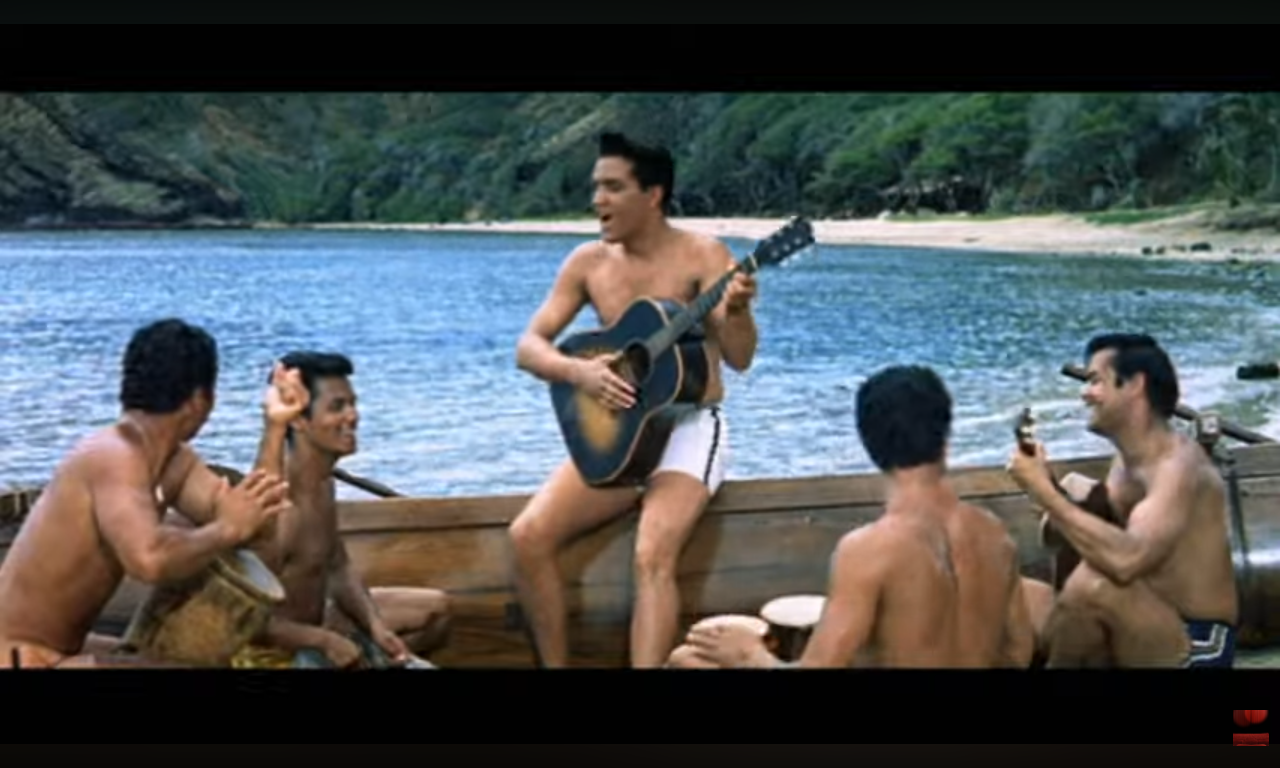
Elvis died on August 16, 1977, at 42, found on his bathroom floor. The official cause was cardiac arrhythmia. The toxicology found fourteen drugs in his system, ten of them prescribed — the accumulation of years of pain management, performance management, the management of a life that had been managed by others since he was nineteen. Roughly 70% of Americans currently take at least one prescription drug. The pharmaceutical substitute for the space where the music used to breathe is not a metaphor. It is a supply chain.
Elvis Presley. Joy in a body, on a stage. This is what the system was afraid of.
Philadelphia. pic.twitter.com/placeholder
— (@mog_russEN) 2026
The Nuclear Family Complex
The word that explains the domestic architecture of this project was dropped in the 1940s. The term "nuclear family" was coined by anthropologist Bronislaw Malinowski in 1924 — but Malinowski's original term was "nuclear family complex." By the 1940s the word "complex" had been quietly removed from sociological texts. What remained carried none of the psychological architecture the original term described.
In psychoanalytic terms, a complex is a structure built on repression. Something circulates on the surface as proper knowledge. Something else — the real knowledge — is managed beneath it. The tension between them produces neurosis. When "complex" was dropped, the repression built into the structure became invisible. The nuclear family became simply what families were — natural, universal, the basic unit of civilization. The psychological architecture was no longer named. It was just the way things were.
The dinner table is where the family agrees, without saying so, to let things be manageable for the length of a meal. It is also where the things that cannot be managed go unspoken. The stress hormones arrive before the words do. The nuclear family doctrine — the unit that belonged to the subdivision that belonged to the consumer economy that belonged to the defense contractor — was the domestic infrastructure of the same project the FBI was running against jazz. Keep the unit sealed. Keep the exchange from happening inside the home. Make the separation feel like nature.
What the system feared most was not the music. It was what the music led to. If Black and white people make something together, they see each other. If they see each other, they fall in love. If they fall in love and have children — Obama, Beyoncé, a generation of people whose existence disproves the foundational premise of the separation — the whole architecture of managed division collapses. The miscegenation laws were not about morality. They were about preventing the encounter that produces something neither side had before.
The Counter-Surge and Its Suppression
The hippie movement was the conscience of a generation refusing the machine simultaneously. Not just refusing Vietnam — refusing the whole architecture: the racial separation, the sexual containment, the corporate consumer culture, the managed consent of the two-party system, the church-state fusion that sanctified the killing. The refusal was expressed first through music, through the body, through the insistence on mixing that the system had spent decades preventing. It terrified the institution for the same reason jazz had terrified it: it was the same refusal happening at scale, in public, faster than the file could be compiled.
The response was the same response, amplified. The drug war did to the hippie movement what the FBI file had done to Lisette Model's photographs. Criminalize the exchange. Make the space where it happens dangerous. Replace it with a pharmaceutical substitute — first the illegal drugs that justified the crackdown, then the legal ones that managed the population back into compliance. The opioid epidemic is the direct descendant of the heroin that followed jazz into isolation.
Twelve years. Twelve voices. Two on Christmas Day. Two within ten days of each other. The dates speak for themselves.
The Psychology of Terror
The war on terror did for Islam what the drug war did for jazz: it made the word arrive too heavy to lift at the dinner table. Sharia law. Jihad. The words that shut down the conversation before the concealed knowledge could surface. In Iran, a religious leader said for forty years that building a nuclear weapon was unislamic. The families living under that ruling never sought the weapon. That fact was available. It did not arrive at the dinner table. The word that would have carried it there had already been charged beyond use.
The two-party system is the macro-scale version of the nuclear family complex. Two parties, both funded by the same defense contractors, both voting for the same military budgets with different rhetorical packaging, both producing the same foreign policy outcomes. The conscience of the voter — the genuine desire for something different — gets routed into a system designed to absorb and neutralize it. The form of choice without the substance of decision. Iraq gets elections. Afghanistan gets elections. The elections produce governments that cannot function without American military support, which requires the next weapons contract, which funds the next election cycle at home. The liberation is a closed loop.
In 2026, Trump asked Congress for the biggest counterterrorism budget in years to implement NSPM-7 — a national security directive targeting "anti-Americanism," "anti-Christianity," and "anti-capitalism." The words that shut down the dinner table conversation have now been written into law as the things that must be surveilled. The New York Times reported the White House seeking $1.5 trillion for defense — offset by steep cuts to domestic programs the administration describes as wasteful. The machine requires feeding. The conscience is always the waste.
Trump is asking Congress for the biggest counterterrorism budget in years to implement NSPM-7, the national security directive targeting "anti-Americanism," "anti-Christianity" and "anti-capitalism"
— Ken Klippenstein (@kenklippenstein) 2026
Graceland, March 23, 2026
On March 23, 2026 — while the Iran war was ongoing, airports were in chaos, and the kill chain was running — Trump made a surprise visit to Graceland. He signed a replica of the guitar Elvis used during his "Aloha From Hawaii" concert in 1973 — the first global satellite broadcast, the concert that performed American cultural dominance over a place taken by military force. After being told that Elvis hadn't actually played the guitar he'd signed, Trump grew reflective. "Could I have taken him in a fight?" he asked. Defense Secretary Pete Hegseth and Attorney General Pam Bondi were present.
Ten days earlier, he had told Fox News Radio's Brian Kilmeade that brown people's genetics make them prone to violence. The man touring the home of the man whose sound the FBI was surveilling in 1952, holding a replica of the guitar from the concert that Americanized a military conquest, had just stated the biological premise that underlies every policy in this article.
U.S. President Donald Trump holds a replica of a guitar after signing it during a visit to Graceland, the home of Elvis Presley, in Memphis, Tennessee. Photo by Kevin Lamarque pic.twitter.com/41VGhX3wug
— corinne_perkins (@corinne_perkins) March 23, 2026
— Donald Trump, Fox News Radio / The Brian Kilmeade Show, March 13, 2026
🚨 Trump openly tells Fox News host that brown people's genetics makes them prone to violence.
— UFO Hunter (@iamufohunter) April 5, 2026
But don't call him a N*zi or you'll offend people.
Thoughts? pic.twitter.com/3MrQkoPrjD
Ad Infinitum — Until It Isn't
Lisette Model photographed Billie Holiday in her casket in 1959 and stopped taking jazz photographs out of fear. The photographs existed. They could not be made to not exist. They waited 66 years and were published anyway. What the FBI tried to bury is in the book now. The book is real.
The war on culture does not end cultures. It drives them underground, where they become more concentrated, more essential, more clear about what they are. The jazz that survived the FBI file became the foundation of every popular music form that followed. The hippie movement that survived the drug war produced the internet's original architecture of open exchange. The thing the system is afraid of does not disappear when the system moves against it. It waits.
The dinner table's silence was always temporary. Someone always eventually says the thing that wasn't supposed to be said. The question is who says it first — the institution naming what it intends to suppress, or the person at the table who has had enough.
We are naming it closed.
What Is Established — Not Opinion, Record
- The FBI surveilled joy, not communism: The 28-page file on Lisette Model was a response to Black and white Americans making music together. That is documented. The book was published in 2025.
- The drug war was announced as what it was: Nixon's aide John Ehrlichman said it on the record. Designed to criminalize Black communities and the antiwar left. Not to stop drug use.
- The nuclear family complex dropped the word that named the mechanism: "Complex" was removed in the 1940s. The repression became invisible. The dinner table silence became nature.
- The war on terror made the word arrive too heavy to lift: Same mechanism. Different vocabulary. The word that would carry the concealed knowledge gets charged beyond use before it reaches the table.
- The deaths are documented: Twelve cultural figures in twelve years. The circumstances of several are disputed by family members and those close to them. The dates cluster in ways that don't require interpretation.
- The biological premise is now on the record: March 13, 2026. Fox News Radio. "The genetics are not exactly your genetics." The separation that jazz threatened in 1952 has been restated as biology by a sitting president in 2026.
This article draws from: documented reporting on Lisette Model and the FBI's surveillance of the jazz scene (Hyperallergic, February 2026); the full transcript of Trump's Fox News Radio interview with Brian Kilmeade (Senate Democratic Leadership / Roll Call Factbase, March 13, 2026); the New York Times defense budget reporting; and the public record on Nixon aide John Ehrlichman's admission regarding the drug war's design (Harper's Magazine, 2016). The convergence was not planned. It arrived at the intersection of a jazz photographer and a sitting president saying the quiet part on the record.