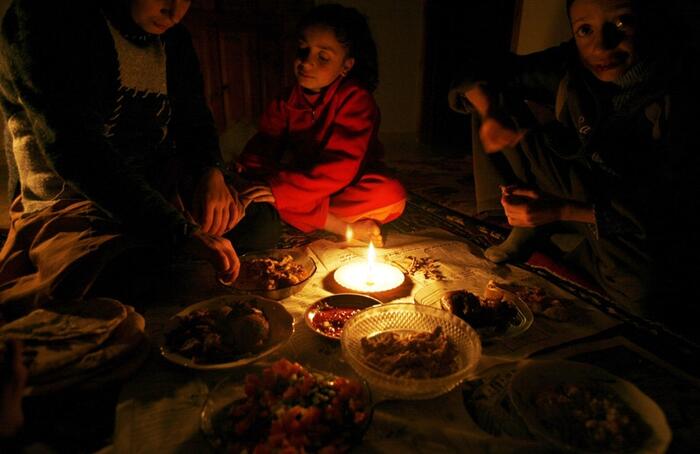
The word that explains how this happened was dropped in the 1940s. What it described didn’t go away. It just stopped being named — which is, as it turns out, exactly how the structure works.
The Complex That Lost Its Word
The term "nuclear family" was coined by the anthropologist Bronisław Malinowski in 1924. But Malinowski's original term was not "nuclear family." It was "nuclear family complex." By the 1940s and 1950s, the word "complex" had been quietly dropped in sociological and anthropological texts. What remained — "nuclear family" — carried none of the psychological architecture the original term described.
In psychoanalytic terms, a complex is a structure built on repression. Something circulates on the surface as proper knowledge. Something else — the real knowledge — is managed beneath it. The tension between them produces neurosis. Malinowski was describing a family structure that operated this way: a core unit defined by what it contains, what it protects, and what it cannot acknowledge about itself.
When "complex" was dropped, the repression built into the structure became invisible. The nuclear family became simply what families were — natural, universal, the basic unit of civilization. The psychological architecture that Malinowski was describing, the tension between surface knowledge and concealed knowledge, was no longer named. It was just the way things were.
What Religion Became
The dinner table is where the stress hormones stop. Where the complexity of the world gets set down for an hour. Where the family agrees, without saying so, to let things be manageable for the length of a meal.
Proper faith is the same agreement at a larger scale. It holds the family together. It names what is sacred. It also decides, without discussion, which other families fall outside that designation and even who doesn’t belong at the dinner table anymore.

The war on terror did not invent this. It inherited a structure already in place and handed it a weapon. Islam became the word that ended dinner table conversations before they started — not because families examined it and reached a conclusion, but because the word arrived pre-charged. Sharia law. Jihad. The words that shut the complex down before the concealed knowledge could surface.
In Iran, a religious leader said for forty years that building a nuclear weapon was unislamic. The families living under that ruling never sought the weapon. That fact was available. It did not arrive at the dinner table. The word that would have carried it there had already been made too heavy to lift.
In Gaza, 90% of homes in parts of the territory have been destroyed. The families who lived in them are sorting through rubble, looking for food in the open air in winter, burying people who sat across from them at tables that no longer exist. Their disappearance from American dinner table conversation is protected by a different charge — the biblical claim to the land, fused with political identity across decades, made equally impossible to question without the conversation ending before it begins.
The dinner table does not discuss these things. The stress hormones arrive before the words do. The meal would not survive it. So the bread keeps moving and the silence holds and the families who have no table left have no one at the other table asking why.
The Same Machinery, Closer
On March 23, 2026 — the same day AI-guided kamikaze drones appeared for sale on Alibaba — ICE deployed to 14 airports across the United States. Families were separated. People who had been sitting at dinner tables in American homes were removed from them. The machinery built to process the different family abroad arrived at the door.
The children playing emergency with a doll on a stretcher in Gaza know this game because they lived it. The children watching a parent removed by federal agents are learning a different version of the same game. The common thread is not religion or nationality. It is the logic of the complex — the identification of the family that falls outside the structure, and the processing of that family by whatever means the moment provides.
June 2026
By June 2026, Project Maven will transmit 100% machine-generated intelligence to commanders with no human analyst in the chain. The question the dinner table never asked — what are we doing to the family on the other side? — will have no place left in the system to be asked at all.
The machine does not carry the complex. It does not repress anything. It simply has no surface beneath which concealed knowledge can wait. There is no tension between what it knows and what it can say. It processes. The dinner table's silence was human. The machine's silence is structural.
That is the difference between inhumanity and the absence of humanity. The dinner table still had the capacity for the question. It chose not to ask. The machine was built without the capacity. That choice — to build a system incapable of asking — was made at tables where people knew what they were doing and did it anyway.
The counter-record exists. We are keeping count.
The System Working As Designed
The Associated Press got inside Camp East Montana in El Paso. About 3,000 people packed in per day. Loud, unsanitary quarters. Food so scarce detainees steal from each other to eat. Disease spreading through rooms and showers that go uncleaned. Staff made nearly one 911 call per day in the camp's first five months. A nurse calling about a pregnant woman in severe pain with coronavirus. Detainees suffering seizures. Ages ranging from a 19-year-old who fell from a bunk to a 79-year-old who couldn't breathe.
And then this: Owen Ramsingh, a former property manager from Columbia, Missouri, deported to the Netherlands after weeks in the camp, told the AP he overheard a security guard talking about a betting pool among the staff. They were wagering on which detainee would be next to die by suicide. The guard said he had put $500 in.
Ramsingh said the talk was particularly devastating because he had contemplated suicide himself.
This is not a rogue facility. This is the machinery built to process the different family — tested abroad, refined in policy, now operating in El Paso. The same logic that removed human friction from the kill chain removed human conscience from the detention system. Guards gambling on deaths. People on foil blankets. Children in cages marked POD 2.
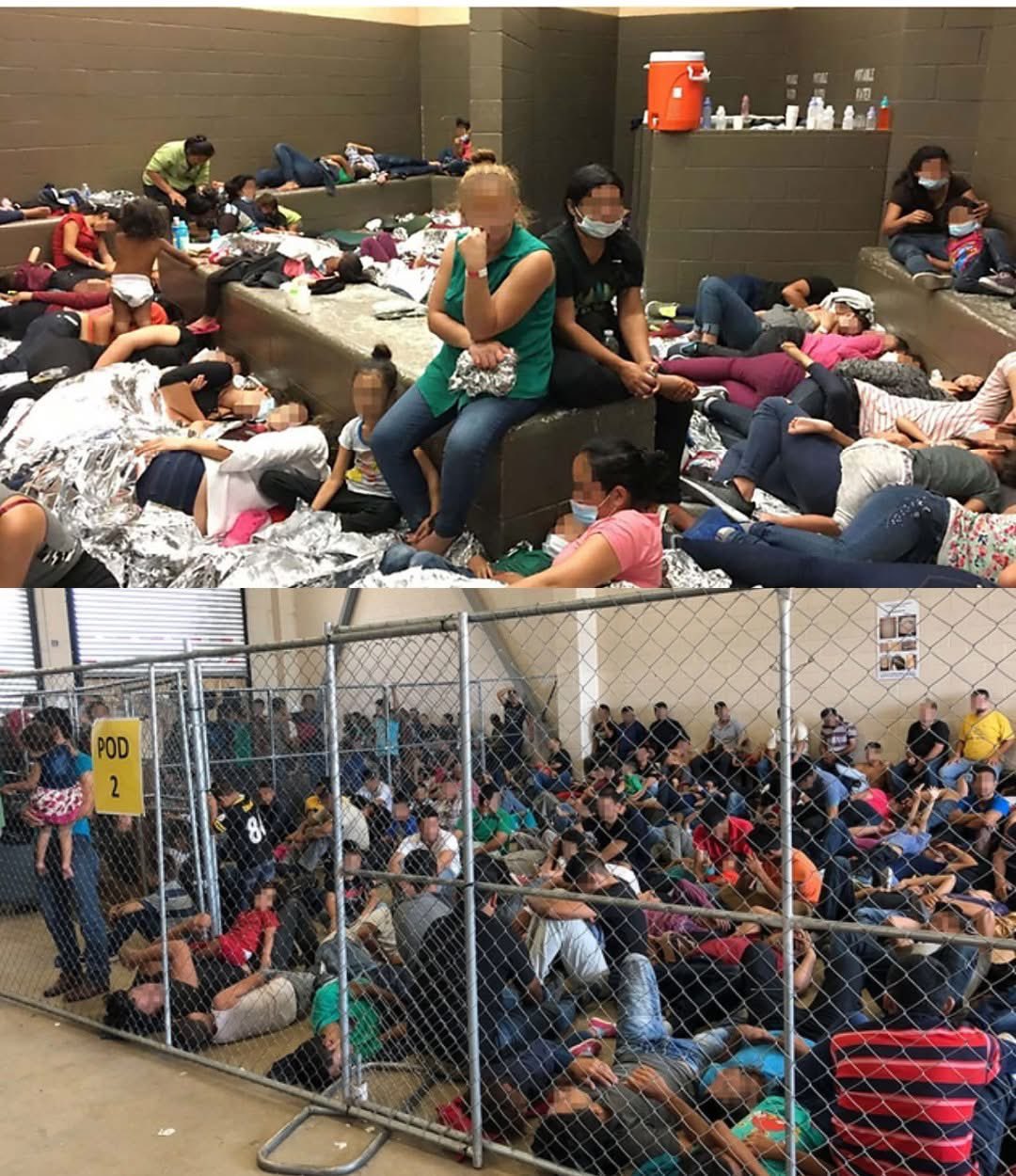
The dinner table that never mentioned the fatwa, that celebrated Thanksgiving without naming what it cost, that couldn't discuss Gaza or Iran because the words arrived too heavy — this is what that silence built. Not abroad. Here. Documented. Real. Happening now.