The Tweet That Moved the Government
On February 27, 2026, Defense Secretary Pete Hegseth announced — via tweet — that Anthropic had been designated a Supply-Chain Risk to National Security. That same evening, President Trump posted on Truth Social directing every federal agency to immediately cease using Anthropic's technology, threatening "major civil and criminal consequences" if Anthropic didn't comply. Neither post cited legal authority. Neither invoked a statute. Neither offered a risk assessment or a security justification.
Within hours, defense contractors began removing Claude from their systems. Agencies began compliance procedures. The market moved. Anthropic's enterprise relationships began to fracture. The designation letter — the actual legal instrument — didn't arrive until March 5. Six days after the damage was done.
A tweet is not a presidential action. It has no legal force. It is not an executive order. It is not a proclamation. It is not a directive. It carries none of the procedural requirements of any recognized form of executive authority. And yet the entire apparatus of federal compliance moved in response to a social media post before any law was engaged.
That gap — between the mood expressed and the law invoked, between the signal sent and the instrument that followed — is not a procedural footnote. It is the center of the story. Because the gap reveals something that has been building for years and has now become impossible to ignore: the government has conditioned institutions to treat presidential displeasure as equivalent to legal authority. Not because the law requires it. Because the infrastructure of anticipatory compliance has made waiting for the law feel like a risk nobody wants to take.
Prerogative: What the Constitution Was Written Against
The founders had a precise word for what happened on February 27, 2026. They didn't invent it. They inherited it from the English constitutional tradition they had lived under and eventually fought to escape. The word is prerogative — the monarch's claimed right to act outside the law based solely on royal will, without statutory authorization, without process, without the consent of the governed.
John Locke defined prerogative as the power to act without legal authorization for the public good. The founders read Locke carefully. They rejected prerogative entirely — not because they doubted emergencies exist, but because they had watched prerogative claimed in the name of emergency become the permanent operating posture of power unchecked by law. They replaced it with enumerated powers: specific, limited grants of authority that flow from the people to their representatives, not from the sovereign's will outward.
The Bill of Attainder Clause — which explicitly prohibits Congress and the executive from singling out a specific person or entity for punishment without judicial trial — exists in the Constitution in two separate places precisely because the founders had experienced attainder firsthand. Bills of attainder were used by the British crown against American colonists. Property confiscated. Rights stripped. No trial. They didn't prohibit it because they read about it in history books. They prohibited it because it had been done to people they knew.
📜 What the Constitution Actually Says About Executive Power
Article II vests "the executive Power" in the President — but provides no definition and enumerates only specific grants: commander in chief, treaties with Senate consent, appointments, pardons, and the duty to faithfully execute the laws.
The entire modern architecture of expansive presidential authority is built on that one vague sentence. Taken to its logical extreme — which is where the current administration has taken it — it means the president can direct any executive branch action through any means, including social media, because the vesting clause grants total control of executive branch conduct.
What is missing from this theory: The Preamble. Which does not say "We the Government." Which does not say "We the Executive." Which says We the People — the source from which every power in every clause that follows is delegated. The president does not have prerogative. The people delegated specific powers to a president to exercise on their behalf. Acting outside those powers is not executive authority. It is taking something that was never his to take.
How Mood Became Mandate
The most important thing about the Anthropic designation is not the designation itself. It is the compliance that preceded it.
Before the letter arrived. Before the legal instrument existed. Before any statutory mechanism had been engaged. Contractors moved. Agencies complied. The market adjusted. Not because the law required it. Because institutions have been conditioned — across years, across administrations, across a thousand smaller demonstrations of what non-compliance costs — to treat the presidential signal as sufficient. To move on mood. To make the law catch up rather than wait for it to lead.
This is not the pleasure of the president — the old formulation of serving at executive discretion. That is passive and deferential. What has been built is something more aggressive. Mood as mandate. The public expression of presidential displeasure functioning as a self-executing instrument not because it has legal force but because the gap between mood and law has been made functionally irrelevant by anticipatory compliance.
The chilling effect doctrine in constitutional law exists for exactly this mechanism — government actions designed to suppress conduct not just in the target, but in everyone watching. The Supreme Court has recognized for decades that government power exercised to produce anticipatory compliance across a broad population is a constitutional injury even when no explicit threat has been made to any specific actor.
What is new is the scale. And the speed. And the infrastructure.
What Compliance Architecture Does Over Time
The Whitney Houston parallel is not metaphor. It is mechanism.
The infrastructure around her didn't announce its control. It accumulated it — through contracts, through access, through the slow normalization of others making decisions that were nominally hers. The label owned the masters. The manager owned the schedule. The relationship owned the public presentation. Each transaction built the next. They formed a system in which her will was structurally subordinate to everyone else's interests, and the moment of resistance — when it finally came — was met not with negotiation but with the full weight of an infrastructure built specifically to make resistance fatal.
The United States government is not singing "My Prerogative." It's singing "Can't Touch This." The designation, the tweet, the prerogative — the entire posture of this executive branch is the claim that it moves how it wants, that the rules don't apply, that no institution, no statute, no constitutional clause can slow it down. The American constitutional order — the system of enumerated powers, separated branches, and rights that cannot be waived by executive mood — has a direct answer to that claim. We the People wrote it down. In 1788. And it starts with the words that tell you exactly who, in this country, is untouchable.
It did not happen all at once. It accumulated through a thousand anticipatory compliances. Law firms rewrote their DEI policies before the executive order landed. Universities adjusted their administrative decisions before the federal funding threat was formalized. Media organizations recalibrated their coverage calculus before the specific threat arrived. AI companies are adjusting their product roadmaps right now, today, in response to what happened to Anthropic — not because a law requires it but because the infrastructure of presidential displeasure has made the cost of resistance visible and the cost of compliance invisible.
Immediate subjugation to a presidential pressure campaign is not a reasonable business decision. It is capitulation under coercion. The law had not moved. No legal instrument existed. A tweet told the market to comply and the market complied — not because it made business sense but because the threat of corporate destruction by presidential mood made resistance look like suicide. That is not the market functioning. That is the market being held hostage. And institutions that surrender to hostage-taking without waiting for the law are not being pragmatic. They are teaching the hostage-taker that it works.
The Stage Was Built. He Promised To Perform On It.
This president did not stumble into power. He solicited it. The compliance architecture that made February 27 possible was built across decades — but the final design, the specific shape of what this administration would do with it, was negotiated in advance. With specific people. For specific deliverables. The promises made to get onto this stage are the reason the performance looks the way it does.
The post-9/11 consolidation built the surveillance architecture and established that national security emergency justifies suspending normal legal constraints. The Patriot Act passed 98-1 in the Senate. The Espionage Act prosecutions of whistleblowers — more under the subsequent administration than all previous administrations combined — established that exposing government conduct had severe personal consequences regardless of the public interest served. The first iteration of the current administration made the displeasure personal and public: executive authority wielded against specific companies, specific law firms, specific media organizations whose conduct was unfavorable.
Each stage normalized the next. Each expansion of the acceptable became the floor for the expansion that followed. And each administration that built a layer of the architecture is now too implicated in its construction to fully oppose what's being performed on it.
The former presidents are quiet. Speaking against the stage means admitting you built it. That is cowardice. At the scale of a constitutional crisis, cowardice and self-preservation are the same crime. The bipartisan nature of the architecture's construction is precisely what makes it structurally durable. If this were a purely partisan project it would be reversible by election. It is not. It is load-bearing infrastructure that has survived multiple transfers of power because each successive administration found it useful and the opposition could never fully condemn what it had previously found necessary.
V.I — The AutopenWhose Signature Is It Anyway?
When Biden used an autopen — an automated signature device — to sign documents in his final days, Trump moved to challenge the validity of those signatures. The legal argument was straightforward: a president must personally, knowingly sign executive actions. Anything less is not a valid exercise of presidential authority. The challenge was loud, public, and dropped just as quietly as it was raised. No explanation. No legal filing. Gone.
The reason it was dropped is the reason it should never have been raised. The moment you establish in court that personal authorship and intent are required for valid executive action, you open every document in this administration to the same question. And the answer to that question — who actually wrote this? — is not the man whose name is on the signature line.
And then there is Russell Vought. ProPublica's reporting reveals he spent 2024 writing the executive orders — before the election, before the inauguration, before Trump signed a single one. He was the chief architect of Project 2025. He pre-wrote the policy. Trump signed the signature line. The orders say "I, Donald J. Trump." The authorship belongs to someone else entirely. Vought told supporters in 2024: "God put us here for such a time as this." Not the voters. Not the Constitution. Not We the People. God. And the instrument of that divine appointment wields, in Trump's own words, the reaper's scythe over the federal government.
Consider the contrast. Whitney Houston did not write "Greatest Love of All." Michael Masser and Linda Creed wrote it. Whitney interpreted it — and through the force of her conviction, her voice, her presence at Wembley in 1988, she made it the most powerful version of itself that will ever exist. She took someone else's composition and elevated it into something transcendent. Something that outlasted everything that came after. Something that still means what it meant the day she first sang it.
Trump took Vought's composition and signed it. Same borrowed material. Opposite direction. Opposite result. Whitney didn't write the words but she owned every one of them. Trump owns none of the orders bearing his name — and the country is bearing the cost of the difference.
VI — The Constitutional CorrectiveWe the People: Not Ceremonial
The Preamble is not throat-clearing. It is not a ceremonial greeting before the real document begins. It is the source of legitimacy for every word that follows. We the People of the United States, in Order to form a more perfect Union, establish Justice, insure domestic Tranquility, provide for the common defence, promote the general Welfare, and secure the Blessings of Liberty to ourselves and our Posterity, do ordain and establish this Constitution for the United States of America.
The president does not ordain the Constitution. The president is created by it, constrained by it, and accountable to the people who established it. The executive power vested in Article II flows from the Preamble — from the people's delegation of specific authority to a specific office to perform specific functions on their behalf. It is not inherent. It is not prerogative. It is borrowed, limited, and revocable through the mechanisms the document provides.
When a president acts through a tweet before a law exists, claims authority no statute grants, punishes a company for its stated values, and moves a compliance apparatus before any legal instrument is served — that is not executive power. That is prerogative. The thing the Constitution was written to end.
📋 The Legal Architecture Already Being Built
Constitutional scholars have identified four independent grounds on which the Anthropic designation fails:
- Bill of Attainder (Art. I, §§ 9–10): The Constitution explicitly prohibits legislative or executive singling-out of a specific entity for punishment without judicial trial. The designation singles out Anthropic specifically and punishes it — extinguishing contract rights and imposing a secondary boycott — without evidence, process, or judicial determination. Yale Law's Harold Koh has argued this exceeds even the power claimed by English kings, who required parliamentary concurrence for attainder.
- First Amendment Retaliation: The government cannot penalize a private entity for its stated positions. Hegseth's own public statements attribute the designation to Anthropic's "corporate virtue-signaling" and "defective altruism" — viewpoint-based punishment documented in the government's own words.
- Unconstitutional Conditions: The government cannot condition a benefit — federal contracts — on the surrender of a constitutional right. The demand to remove safety restrictions is a demand to waive the right to maintain a stated position as the price of market participation.
- Statutory Overreach: 10 U.S.C. § 3252 has never been applied to a domestic company. It has been used publicly once — against a Swiss firm with documented Russian ties. Its procedural requirements — neutral assessment, interagency review, notice, congressional notification — were not met. The breadth of Hegseth's order exceeds what the statute authorizes.
The Floor Becomes a Trapdoor
The Anthropic case is not a story about one company's federal contracts. It is a stress test of whether the constitutional architecture the founders built against prerogative still functions when the person claiming prerogative controls the enforcement mechanisms that would normally constrain it.
If a tweet can move the government before any law is invoked, then the law is no longer the operating authority. Presidential mood is. And if presidential mood is the operating authority, then every company, every institution, every person whose conduct might someday attract presidential displeasure is operating under a compliance calculus that has nothing to do with what the law requires and everything to do with what the signal suggests.
That is autocracy. That is the thing the republic was built to replace. And it is here.
The citizens paying taxes to service the debt that funds the Pentagon budget that cannot be audited — they are funding the apparatus of their own preemptive compliance. The workers whose data flows through AI systems they didn't consent to and can't audit — they are the ultimate subjects of the infrastructure being built under "any lawful use" language, where the government determines what is lawful, through channels that cannot be examined, at a pace that cannot be challenged before the architecture is already load-bearing.
Anthropic's case is the stress test. But its significance is not primarily about Anthropic. It is about whether the document that begins We the People still means what it says — that authority in this country flows from the citizens to the government, not from the executive's mood outward through a compliance infrastructure that moves before the law does. Either the Constitution constrains the president or it doesn't. There is no third option.
Bobby Brown — My Prerogative — Original Music Video, 1988
Bobby Brown recorded "My Prerogative" in 1988. I don't need permission, make my own decisions. The government is singing that song right now — via tweet, via Truth Social post, via designation letter that arrives six days after the damage is already done. But the MC Hammer of justice will come down. It's called the Bill of Attainder Clause. The founders put it there specifically for this moment. Can't touch this.
MC Hammer — Can't Touch This — Live. That's We the People. Can't touch this.
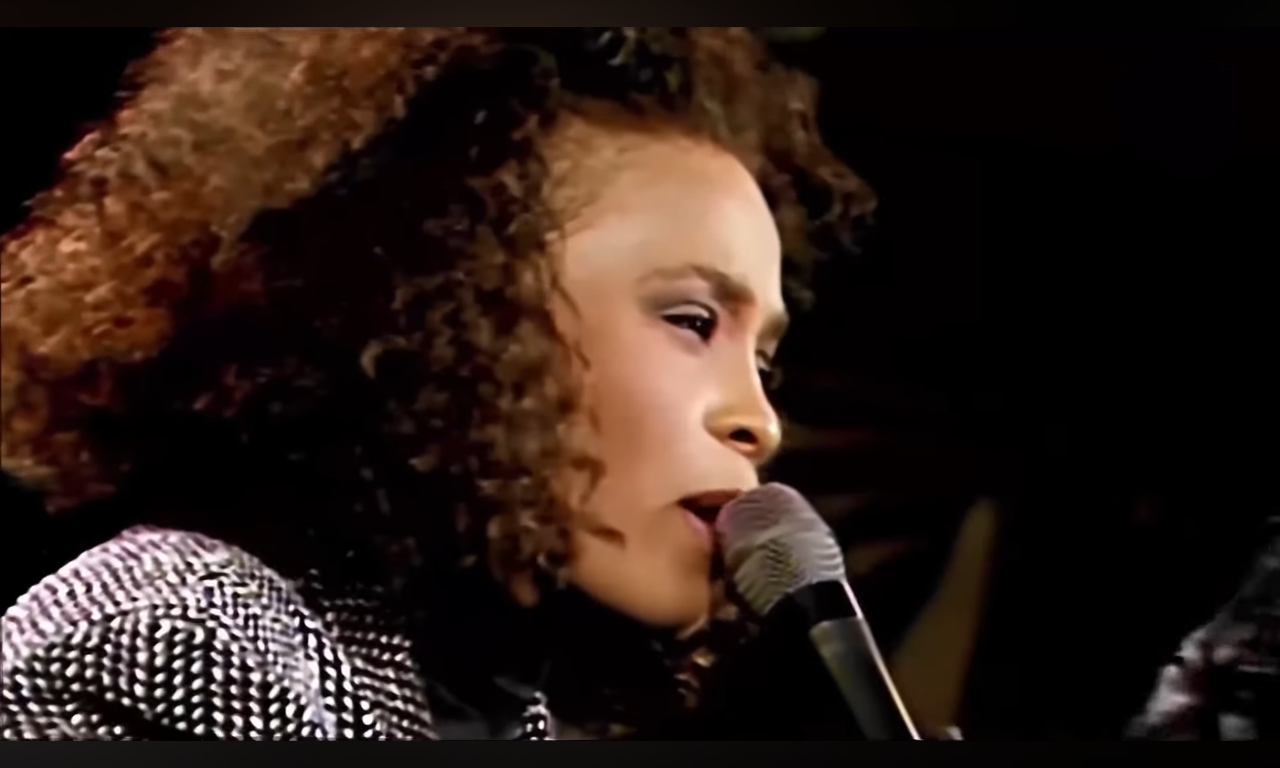
That same year — 1988 — Whitney Houston stood on the stage at Wembley Stadium and sang to 600 million people across 67 countries at a concert demanding the release of Nelson Mandela. A man imprisoned for standing on principle against a government that called his values a threat to national security. She sang I believe the children are our future. The Preamble to the Constitution says the same thing in legal language: secure the Blessings of Liberty to ourselves and our Posterity. Posterity. The children. The future. The people who will inherit whatever we allow to be built right now, before anyone has litigated what it means.
Whitney Houston — Greatest Love of All — Nelson Mandela 70th Birthday Concert, Wembley Stadium, 1988
We the People hold the supreme authority in this constitutional order. Not borrowed. Not delegated downward. Sovereign. We are our own voice, we don't delegate that to an unaccountable indefensible executive branch of private billionaires. We are the corrective, we are the Constitution and what it was built for and we the people deserve true representation, not lawless offensive acts in our name.